AI Sharpening Basics
AI upscaling vs normal sharpen filter: what's different?
TL;DR
- AI upscaling increases pixel count and tries to rebuild plausible detail, so it helps when a file is too small for print, cropping, or larger display use.
- A normal sharpen filter does not add resolution. It boosts edge contrast inside the pixels you already have, so it helps when the photo is the right size but looks a little soft.
- If you need both, the safe order is usually denoise first if needed, upscale second, sharpen last.
- When a tool makes blocks, halos, or waxy skin more obvious, it is usually the wrong tool for the problem or the strength is too high.
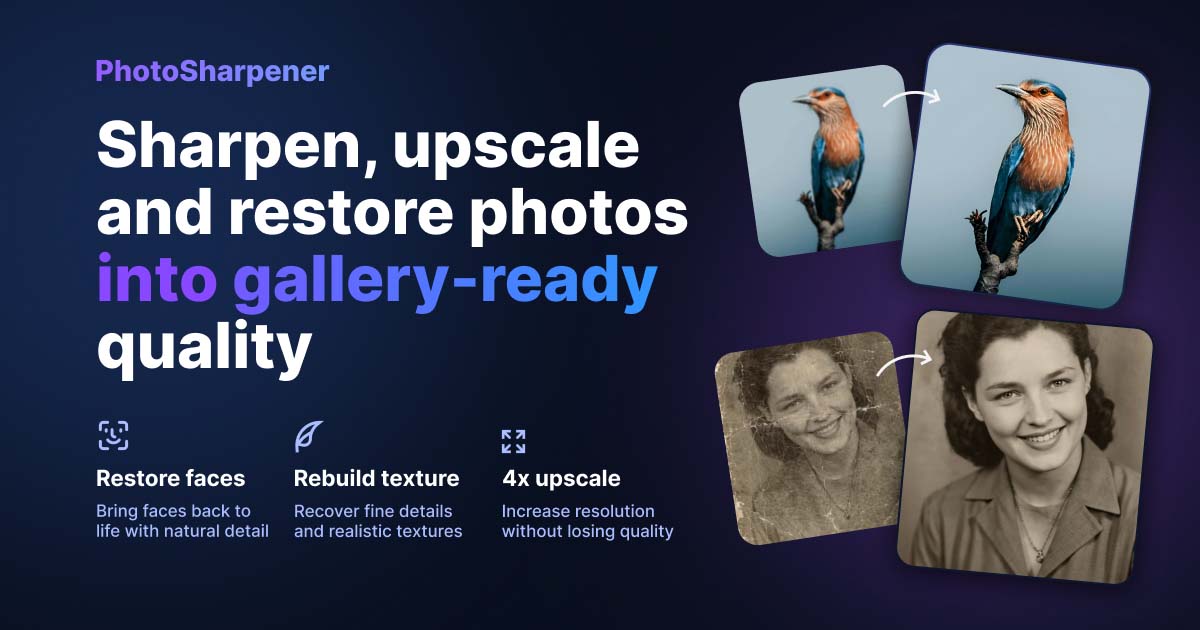
- PhotoSharpener is a practical browser option when you want AI upscaling, cleanup, and light finishing sharpness in one quick workflow.
If you are comparing AI upscaling vs a normal sharpen filter, the useful answer is simple: they solve different problems. Upscaling is a size-and-resolution fix. Sharpening is a clarity finish. They can work together, but they are not interchangeable, and using the wrong one first is how people end up with crunchy edges, fake detail, or a file that looks worse than the original.
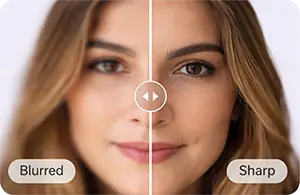
That confusion happens because both tools can make an image look "clearer" in a preview. But they get there in different ways. A sharpen filter makes existing edges look stronger. AI upscaling makes the file bigger and predicts what higher-resolution detail might look like. Once you understand that difference, it gets much easier to choose the right move for a blurry scan, a tiny social media image, or a photo you want to print larger.
Start by diagnosing the real problem
If the photo is too small, upscaling is the first move
The fastest test is to check the pixel dimensions before you touch any sliders. If the file is tiny for the job you need, sharpening is not the fix. A 900-pixel-wide photo that needs to fill a poster, a product page zoom, or a high-resolution slide is missing pixels. You need more image data, or at least a believable reconstruction of it.
That is where AI upscaling fits. It enlarges the file to a bigger pixel grid and tries to make that enlargement look natural. This is why upscaling is the more relevant tool for old low-resolution scans, heavy crops, screenshots, chat-app downloads, and print projects. If the image is simply too small, sharpening alone will only give you a sharper-looking small image.
If the size is fine but edges look soft, sharpening is the first move
Sometimes the file already has enough pixels and just looks a bit dull. Maybe the scan is slightly soft. Maybe a phone photo lost some snap after compression. Maybe text, eyelashes, or product edges look less defined than they should. In those cases, a normal sharpen filter is often the right first move because the problem is local contrast, not missing resolution.
This is the key distinction most comparison pages are trying to teach. Ask one question before anything else: is the image too small, or is it the right size but too soft? If it is too small, think upscale. If it is the right size but soft, think sharpen. If it is both, use both, but in the correct order.
What AI upscaling actually does
It increases pixel count and rebuilds plausible detail
AI upscaling changes the dimensions of the image. A file that starts at 1000 x 1000 pixels can become 2000 x 2000 or 4000 x 4000. That matters for printing, tighter crops, and larger screens because you are no longer stretching the same small grid across a bigger output.
The important part is how it gets there. Traditional resizing methods like bicubic interpolation fill in missing pixels with mathematical guesses based on nearby values. AI super-resolution models do more than that. They look for patterns in edges, textures, faces, fabric, hair, and other structures, then predict what a higher-resolution version should plausibly look like.
That is why AI upscaling can look much better than ordinary resizing. It can make a small file appear cleaner, smoother, and more detailed. But it also has limits. The added detail is a prediction, not a perfect recovery of hidden truth. That matters a lot when the source is extremely blurry, badly compressed, or already damaged.
It helps most with print, crops, and small files
In practical terms, upscaling is most useful when the image needs to become bigger without falling apart. That often means:
- an old family scan that is too small for reprint
- a cropped portrait that now needs more room
- a product image that must meet a larger display size
- a screenshot or compressed download that looks blocky when enlarged
If you are preparing an image for paper output, the print math matters more than the preview. This is where a separate print-resolution guide helps because it shows when the file truly has enough pixels for the size you want. Upscaling can get you into the right range, but it still needs to look believable when you inspect it closely.
What a normal sharpen filter actually does
It boosts edge contrast without changing resolution
A normal sharpen filter does not make your image bigger. It does not create a new higher-resolution file. What it usually does is increase contrast around edges so boundaries look crisper to the eye. Dark pixels near an edge get a little darker, light pixels get a little lighter, and the edge feels more defined.
That is why sharpening can be so useful on a slightly soft image. It does not need to invent a whole new pixel structure. It is improving the visibility of detail that is already mostly there. When the source is decent, even a modest sharpening pass can make hair, text, product outlines, and facial features look more readable.
The trade-off is that sharpening can only work with what exists. If the file is tiny, pixelated, or severely out of focus, a normal sharpen filter has nothing solid to build on. It can make the image look harsher without making it meaningfully better.
It works best on mild softness, not missing pixels
This is where sharpening is often misunderstood. People use it on low-resolution files because it gives a quick feeling of improvement at fit-to-screen size. But once you zoom in, the problems show up fast: bright halos, hard outlines, thicker-looking text, and skin that starts to look brittle or crunchy.
Sharpening is strongest when the image already has enough size and only needs a final clarity lift. That makes it useful for mildly soft portraits, scanner softness, small motion blur, and final export cleanup after resizing. If your real problem is low resolution, sharpening can exaggerate the weakness instead of fixing it.
The biggest differences at a glance
A quick comparison table
| Factor | AI upscaling | Normal sharpen filter |
|---|---|---|
| Main job | Increase size and rebuild plausible detail | Increase edge contrast inside existing pixels |
| Changes dimensions | Yes | No |
| Adds pixels | Yes | No |
| Best for | Small files, crops, print prep, pixelation | Mild softness, final cleanup, slightly dull edges |
| Risk when overused | Fake texture, halos, odd facial detail, large files | Crunchy edges, glowing outlines, noisy skin, thicker text |
| Good workflow role | Early, when output size must increase | Late, after size is final |
Why the wrong tool often makes the image look worse
Most bad results come from using a real tool on the wrong problem. Sharpening a tiny file can make blocky edges look more obvious. Upscaling an already large clean image "just in case" can make the file heavier without giving you a visible benefit. And when a noisy image is sharpened before cleanup, the tool can treat noise like detail and make the entire photo feel rough.
This is why diagnosis matters more than brand choice. Before you compare tools, compare symptoms. Visible blocks usually point to low resolution. Uniform softness points to focus or softness. Random grain in the shadows points to noise. Once you identify the dominant problem, the right method is usually obvious.
When upscaling beats sharpening
Small prints, old scans, screenshots, and heavy crops
Upscaling is the better choice when the image needs to cover more physical or digital space than the source can support on its own. A few common examples:
- you want to print a small scan larger than it can honestly handle now
- you cropped deeply into a photo and lost too many pixels
- you downloaded an image from a messaging app and it looks blocky
- a screenshot or product image must appear larger on screen
In those cases, sharpening may still play a role later, but it is not the main fix. The main fix is getting the file to a realistic size first. If your goal is poster output, this large-poster guide is a better framework than repeatedly sharpening and hoping the print hides the weakness.
Cases where AI still has limits
AI upscaling is useful, but it is not magic. If the source is severely out of focus, full of compression damage, or missing important facial structure, the model starts guessing harder. Sometimes the result looks sharp at first glance but falls apart at 100% zoom. Hair becomes stringy, skin becomes waxy, and edges start looking drawn instead of photographed.
That is why the best target is usually the smallest upscale that solves the real need. If 2x gets you to a safe print or display size, there is often no reason to force 4x. Bigger numbers are not automatically better. They just give the model more room to invent.
When sharpening is enough on its own
Full-size photos that only look a little soft
Sharpening is often enough when the file already has reasonable dimensions and the issue is mild softness, not missing resolution. Think of a portrait that looks slightly flat after scanning, a product shot whose edges need a cleaner finish, or a phone photo that feels dull after compression but is still large enough for the intended use.
In those situations, a light sharpen pass can do exactly what you want: bring back edge definition without changing the structure of the file. That is often a better choice than upscaling because it stays closer to the original and avoids unnecessary file bloat.
If the image is a portrait, keep the face test in mind. Eyes and lashes can handle a little sharpening. Skin usually cannot handle much before it starts looking fake. When people say a tool "improved" the image but it still feels wrong, this is often the reason.
Signs you are sharpening too hard
Over-sharpening has a very recognizable look once you know what to watch for:
- bright or dark halos around strong edges
- text that looks thicker instead of clearer
- pores, grain, or JPEG damage becoming louder
- hair looking brittle rather than natural
- skin texture turning rough, dry, or artificial
If those signs appear, back off rather than adding more edits. For portraits, a slightly softer but believable result is almost always better than a hyper-sharp face that looks processed. If the file is for a tribute print or keepsake, the natural option usually wins even more clearly, which is why this memorial print article puts likeness ahead of maximum sharpness.
If you need both, use them in this order
Upscale first, then sharpen at the final size
The safest order is usually:
- clean obvious noise or compression if needed
- upscale to the target size
- sharpen lightly at the final size
That order matters because sharpening before enlargement can magnify halos and make edge artifacts larger and harder to hide. Once the image reaches its final pixel size, a light sharpening pass becomes more predictable. You are finishing the file, not forcing sharpness into a moving target.
This is also why many people get disappointing results from stacking random apps. They sharpen, then resize, then sharpen again, then add another enhancement layer. By the end, the image may look dramatic in a small preview but brittle in real use.
Add denoising before both when grain is the real problem
Noise changes the workflow. If the file is grainy, especially in shadows or skin, sharpening can grab that noise and make it louder. In that case, clean the noise first, then decide whether you still need more size, and only sharpen at the end if the image truly benefits.
That order is especially useful for old scans, low-light phone photos, and compressed portraits. If your main issue is rough texture instead of softness, solve that first. A separate guide on cleaning noisy portraits while keeping skin natural goes deeper on that problem, but the short version is simple: do not sharpen noise and expect it to turn into detail.
A simple workflow for beginners
Five steps that work for most photos
If you just want a practical decision flow, use this:
- check the pixel dimensions and decide the final use first
- zoom in and identify the main issue: low resolution, softness, or noise
- if the file is too small, upscale it only as much as needed
- if the file is large enough but soft, apply light sharpening instead
- if you used both, sharpen only after the file is at its final size
This approach works because it keeps each tool in its lane. Upscaling handles size. Sharpening handles local clarity. Denoising handles rough texture. The more you blur those jobs together, the more artificial the result tends to look.
When a browser-based tool is the easiest option
If you are a casual user and do not want a full desktop workflow, a browser-based tool can be the simplest route because it combines resizing, cleanup, and sharpening-style enhancement in one place. A tool like PhotoSharpener fits that use case well when the goal is to make a small or soft photo look cleaner without manual setup.
The important part is not treating the strongest preview as the best result. Choose the version that still looks believable when you zoom in. If a face changes too much, if text gets thicker, or if edges glow, back off one step. Good enhancement looks like the original image on a better day, not like a different image.
FAQ
Is AI upscaling the same as a sharpen filter?
No. AI upscaling changes image size and increases pixel count. A sharpen filter keeps the same dimensions and boosts edge contrast within the existing pixels.
Does sharpening increase resolution?
No. It can make a photo look clearer, but it does not add pixels or turn a small file into a genuinely higher-resolution one.
Should I sharpen before or after upscaling?
Usually after. Get the image to its final size first, then apply a light sharpen pass if the result still needs more edge definition.
Can AI upscaling fix a blurry photo by itself?
Sometimes it can improve a mildly soft low-resolution image, but it does not remove the real limits of severe blur or missed focus. When the source is very weak, the extra detail becomes more speculative.
What if the photo is both noisy and blurry?
Start by deciding which problem is more dominant. If noise is strong, reduce that first. Then upscale if the file is too small, and sharpen only at the end if the image still needs a light clarity finish.