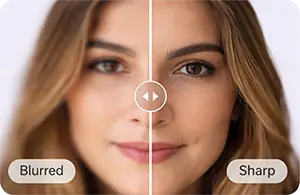
Blur Diagnosis & Fixes
How can I make a blurry photo clear again?

TL;DR
- Yes, many blurry photos can be made noticeably clearer if the file still holds real structure.
- Start with the best original you can find, because chat apps, screenshots, and old exports make recovery harder.
- Use the fix that matches the problem: denoise for grain, deblur for softness, and upscale only when the image is also too small.
- PhotoSharpener is useful when you want to test blur cleanup and upscaling in one quick browser workflow.
- Stop when the photo looks natural. A believable result beats a sharper-looking fake one.
If you are trying to make a blurry photo clear again, the short answer is: sometimes yes, often enough to save the picture, but not in every case.
Photos usually become blurry for one of a few reasons. The camera moved. Focus landed in the wrong place. The file was compressed too many times. Or the image is simply too small, which makes softness look worse when you zoom in. Each problem needs a slightly different fix, and that is why random sharpening sliders often disappoint people.
The best workflow is simple. Figure out what kind of blur you have, find the cleanest source file, improve clarity in a controlled way, and only then enlarge the image if you need more pixels. That approach gives you the best odds of a result that looks cleaner and still feels real.
Figure out why the photo looks blurry
Motion blur, missed focus, and soft scans are different problems
The first step is not editing. It is diagnosis.
Motion blur usually creates a directional smear. Edges look dragged, and moving subjects often show a faint double line. Out-of-focus blur is softer and more even, as if the image never snapped into place. Scanner softness and old digital files often look flatter than truly blurred, with muted edges and low micro-detail rather than a dramatic streak.
That distinction matters because the fixes are not interchangeable. A mild focus miss often responds well to AI deblur. A noisy low-light photo may need denoise before anything else. A soft scan may improve more from better source handling than from stronger sharpening. If the softness is really a focus miss, start with our out-of-focus guide. If the edges look dragged instead of soft, the motion blur guide is the better match.
| What you see | Most likely problem | Best first move |
|---|---|---|
| Directional streaks or ghosting | Motion blur or camera shake | Try a deblur tool and keep expectations modest |
| Even softness across the subject | Missed focus or lens softness | Use conservative AI deblur or sharpening |
| Fuzzy detail with visible grain | Noise plus softness | Reduce noise first, then sharpen lightly |
| Mushy edges after sharing or downloading | Compression damage | Find a better source file before editing |
| Small file that falls apart when enlarged | Low resolution | Improve clarity first, then upscale if needed |
Compression and low resolution can make a photo look blurrier than it is
Many "blurry" photos are actually a mix of blur, compression, and too few pixels.
This happens all the time with messaging apps, social uploads, screenshots, and old email attachments. The file may have started out acceptable, but every resize and re-save strips away real information. By the time you edit it, the image looks soft, blocky, and tired.
That is why it helps to ask one practical question before touching any tool: is the photo truly blurry, or is it just a weak copy? If the answer is "probably a weak copy," your biggest improvement may come from finding the original rather than editing harder.
Know what can actually be fixed
Mild blur often improves a lot
The best candidates are photos that are still readable at full size. You can make out eyes, hair edges, clothing seams, object outlines, or text strokes, but they are softer than they should be. In those cases, modern AI tools can often make the photo look much cleaner than a normal sharpen filter can.
This is especially true for:
- casual phone photos with slight camera shake
- portraits that missed focus by a little
- old scans that look dull rather than destroyed
- compressed images where the subject is still recognizable
If the photo falls into one of those groups, you have a real chance of improvement. You are not creating a miracle. You are helping the software read the structure that is still there.
Severe blur still has a hard ceiling
Once the original detail is mostly gone, every tool runs into physics.
A face reduced to a smooth blob, a sports shot with long motion streaks, or a tiny chat download with no clean edges left can still become more usable, but not truly sharp. At that point the software is leaning on plausible reconstruction, not literal recovery of what the camera captured.
That is why the real goal should be "clearer and more natural," not "perfectly restored." If you need a deeper reality check on this limit, our guide to recovery limits breaks down what comes back well and where the ceiling drops fast.
Start from the best file you can get
Find the original before you edit anything
Before you edit, look for the strongest version of the photo you can access:
- the original file from the phone or camera
- the cloud backup version
- the email attachment sent before the image went through a chat app
- the fresh export from the person who took the photo
That search can matter more than your tool choice. If you fix a WhatsApp copy, you are enhancing a file that has already lost detail. If you fix the original, you are giving the software more real structure to work with from the start.
When the photo matters emotionally, this is the step people regret skipping. They spend an hour comparing enhancers when the biggest improvement was sitting on another device all along.
Re-scan prints instead of editing an old bad scan
If the image only exists as a physical print, make a new scan before you try to rescue the old digital copy. A weak scan usually has its own softness, dust, and color shift layered on top of the original photo.
A fresh scan at a generous resolution gives you a better master file and more room for cleanup later. If you need the scanning side explained in detail, our article on scan setup covers the practical setup.
If you cannot scan the print and must photograph it with a phone, use even light, keep the camera parallel to the print, avoid reflections, and capture the highest-quality file your device allows. Then treat that image as your master and edit a copy, not the original capture.
Choose the right fix in the right order
Denoise first if grain is obvious
Sharpening noisy photos is one of the fastest ways to make them look worse.
If the image has obvious grain, speckled shadows, or rough color patches, reduce that noise first or use a tool that handles noise and blur together. Otherwise, the software may interpret noise as real detail and harden the entire image.
This is also why manual sharpening in Lightroom works best as a finishing move. Adobe's own guide to Lightroom sharpening focuses on controlled sharpening with Radius, Detail, and Masking, not brute-force rescue of a broken file.
Use deblur for softness and upscale only when size is also the issue
People often stack every enhancement they can find because "make it clearer" sounds like one job. It is really two separate questions:
- Is the image soft?
- Is the image too small for how I want to use it?
If the image is soft but already large enough, start with deblur or conservative sharpening. If the image is small but not very blurry, start with upscaling. If it is both small and blurry, improve clarity first and then enlarge the cleaned-up result.
That order matters because upscaling a blurry image simply creates a bigger blurry image. You want the model to work from the cleanest possible version before you add pixels.
Make the photo clearer without making it fake
Use one moderate pass before you stack tools
Most photos look better after one sensible pass than after three aggressive ones.
Start with a moderate setting. Check the result. If it still feels soft, make a small adjustment. This works better than jumping straight to the maximum because over-processing usually shows up faster than people expect, especially on faces and fine edges.
A simple decision rule helps here:
- if the new version looks clearer and still believable, keep going carefully
- if the new version looks sharper but also stranger, back off
- if every pass makes the image harsher, you probably need a better source rather than more processing
This is where a browser-based workflow can be useful. A tool like PhotoSharpener gives casual users a quick way to test blur cleanup and upscaling without building a full desktop workflow, but the same rule still applies: choose the most natural result, not the strongest preview.
Check faces, text, and edges at full size
Never judge a repair from a tiny fit-to-screen preview only.
Zoom in and inspect the parts that reveal failure first:
- eyes, eyelashes, and eyebrows
- hair edges
- text strokes
- high-contrast outlines
- noisy shadow areas
If those details look haloed, waxy, brittle, doubled, or strangely redrawn, the edit has gone too far. A good enhancement should feel like the original photo on a better day, not like a different camera invented new details for it.
Upscale only after the blur is under control
Why deblur first and enlarge second
When a photo is both blurry and small, the order of operations makes a real difference.
Deblurring first gives the software a better base to enlarge. Upscaling first locks the softness into a larger grid, which makes it harder for later sharpening to look natural. You can still improve the file afterward, but the result usually feels less clean and less convincing.
This is also why people sometimes think an upscale tool "did not work." The real problem was not the model. It was that the blur was never addressed before enlargement.
Match the final size to the pixels you actually have
Even after a good repair, your file still has limits. If the image will live on a phone screen, social post, or small print, you can be more flexible. If it needs to hold up in a large print, presentation slide, or product listing zoom view, pixel count matters more.
Use a simple rule:
- for everyday web use, natural-looking clarity matters more than hitting a huge pixel number
- for print or large displays, sharpen only as much as needed and scale to a realistic output size
If you are planning a print, keep our guides to print resolution and poster upscaling nearby while you decide.
A simple workflow that works for most people
Five steps from blurry file to usable image
If you want the shortest dependable path, use this order:
- find the best original or make a fresh scan
- inspect the blur type at full size
- reduce obvious noise if the file is grainy
- run one moderate deblur or sharpening pass
- upscale only if the image is still too small for the final use
This workflow works because each step solves the next problem cleanly. It keeps you from using aggressive sharpening as a substitute for source quality, and it prevents you from enlarging flaws before you fix them.
When a browser tool is the easiest option
If you are a casual user and just need a family photo, profile picture, scan, or product image to look better fast, an online tool is usually enough.
That is where a simple browser workflow can make sense. Upload the best file you have, compare the result at full size, and stop early if the image starts looking synthetic. For many everyday photos, that is faster and safer than learning a full editor from scratch.
If you already use Photoshop or Lightroom, manual refinement still has value, especially when the blur is mild and you want precise control. But if the job is "make this one weak photo clearer without turning it into a project," convenience matters.
Mistakes that make blurry photos look worse
Oversharpening, halos, and waxy skin
The most common mistake is pushing until the image looks "impressive" instead of believable.
Too much sharpening creates bright outlines, harsh texture, and crunchy detail. Too much portrait cleanup can smooth skin until it stops looking human. Too much face enhancement can subtly change the person. Those mistakes usually look worse in a print or at full-screen size than they do in a tiny preview.
When in doubt, choose the softer version that still looks like the original scene.
Re-saving low-quality JPEGs and screenshots
The second big mistake happens after the edit is already done.
People improve a photo, take a screenshot of the preview, send it through a chat app, and then wonder why it looks soft again. Others keep opening and re-saving the same low-quality JPEG until compression damage takes over.
Export one clean final file and keep it as your master. If you need smaller copies later, make them from that master, not from a screenshot or a previously compressed version.
FAQ
Can an out-of-focus photo be made clear again?
Often, yes, if the focus miss is mild and the subject still has recognizable structure. If the whole subject is deeply defocused, the result may improve but probably will not become truly sharp.
Can motion blur be fixed?
Sometimes partially. Simple camera shake or mild movement can improve a lot. Heavy motion streaks are much harder because the original detail was smeared across the frame.
Is Photoshop enough, or do I need AI?
For light softness, Photoshop or Lightroom sharpening may be enough. When the image also has compression, low resolution, or more serious blur, AI tools usually do a better job of making the result look usable without as many halos.